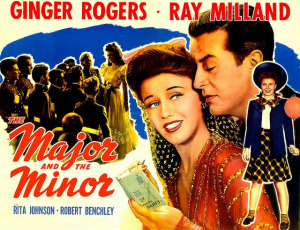
The Major and the Minor (1942)

There is something serene and assuring for the entire duration of any movie as long as Ginger Rogers is in them. I have watched quite many of her films – excluding the famous musicals she appeared with Fred Astaire.

She comes across as a simpleton in many of her roles and usually plays the characters with vibrant expressions, making you fall in love with her. My wife was beside me, yet I could not stop admiring her beauty and telling my wife about it.

Susan Applegate, played by Ginger Rogers, is witty, homesick, short in cash – running out of excuses and patience at the train station until she sees a lady who is buying a half-ticket each for her two children.

One moment – Susan appears as a perfect young lady, someone with whom you always wished to dance at a ball. And in the next scene, she disguises herself as a 12-year old and manages to board the train with a half ticket. The newly found disguise and her antics would be short-lived as the conductors soon find out she isn’t a kid from the Swedish stock, which she claimed for her excessive height. Even Greta Garbo’s famous line ‘I want to be alone’ from Grand Hotel doesn’t impress them and is chased away when they catch her smoking while breathing in the fresh air.

Major Kirby, played by Ray Milland, comes across as a gentleman who offers refuge to the 12-year old Su-Su, her alias. He is on his way to his military institute and his fiancée, Pamela.

Despite these coincidences, twists, and turns to the plot -the movie retains the humour without a dull moment.

After being in the industry for close to 14 years and having written stories and screenplays for around 40 movies, Billy Wilder makes his debut as a director with this movie.

The other characters who play a significant part in the movie are Kirby’s devious fiancée Pamela played by Rita Johnson, Lucy – the science freak and the sister of Pamela played by Diana Lynn; the six cadets from the military school who take turns in impressing Su-Su and Lela Rogers as Mrs. Appleton.

It was remade in another version as You are Never Too Young in 1955 – which starred Jerry Lewis disguising as a 12-year old.

The 1955 movie’s plot also inspired the Hindi comedy movie Half Ticket, which had Kishore Kumar playing the kid supported by Madhubala and Pran.

When I remember The Major and the minor, I can think of Ginger Rogers and her different avatars in this movie.

A beautiful scalp treatment lady; a 12-year old kid; alone girl wanting care and affection in the train;  a confused love-struck belle who plays the centre of attraction to those hundreds of young cadets in the institute;

A doll resembling Judy Garland from The Wizard of Oz; a maiden of the prom night; a young woman hopelessly lost and in love; a matured and elderly Mrs. Appleton or the lovely lady Susan, waiting at the train station for Kirby towards the end.

Take your pick and rest assured, you will be left mesmerised with the ease in which she has portrayed all the roles mentioned above.

The first time when I heard Manna Dey sing

My cousin Harish and I visited our maternal grandparents to spend our summer holidays in a tiny village called ‘Sirsangi’ located in North of Karnataka and were part of the Belgaum district.

My father used to drop me there each year, an overnight journey by bus. I did this religiously until I was about eight years of age, and Harish used to join me over there.

Staying with grandparents for a period over two months was exciting to us. Sipped cartons of Frooti’s; ate unlimited supply of mangoes; sitting inside the official jeep imitating Sunny, our driver; playing in the house garden; visiting places of interest nearby, and of course, cricket.

Not to forget the wrath we faced from our maternal aunt for staying outside for long hours under the sun. We feared her though we loved her because she expressed angst; she used to place her teeth on her lips, holding a stick in her hand chasing us when we refused to come home. We eventually did end up at home at noon because of scorching heat and to have lunch.

Sirsangi being a village, had repeated problems with electricity back then. Although there were quite many historical sites, we seldom went out. Even if we did, I could not recall the importance of those places.

My grandmother was strict and never allowed us to venture outside the community boundary walls by ourselves. We were allowed to play in the vast open field that separated my grandpa’s office and home.

When staying out and playing became mundane (which used to happen each day), we pleaded with our maternal aunt to switch on the TV. And we begged her more when there was electricity. Apart from weekends, the television programmes during the daytime did not appeal to us.

There were no cartoons or no fights on TV. It was boring until one day we saw my grandfather bringing in a new piece of gadget and placed under the TV rack. It was a Video Cassette Recorder (VCR).

With the VCR came a video cassette sent from Bangalore, which played for an hour. It had songs from English, Kannada, Tamil, and cartoons.

If I remember correctly, the fifth song of the recording was a B/W video of a Hindi song. At first, it was boring, and we didn’t quite know how to operate the remote; moreover, my aunt would be away doing her household chores, and she knew where the remote was. Nevertheless, we committed ourselves each time to watch the tape end to end.

All I remember from the song is that – there is a small gathering of people, both kids, and adults, and behind them sat an elderly gentleman rocking the chair. His walking stick is visible beside him, and seen is him patting a young girl’s head seated below next to the chair. A lady is playing the piano, and within seconds, he starts to utter words in phrases that had a sense of melody. Not that we knew anything about it then.

He goes on singing, and the camera shifts to an idol to whom he is referring to in the song. The seated children also join him, forming a chorus that is used as a buffer between his lines and the theme music.

Next scene, I see a young lady away from this group in a room getting up, irritated by the song, decides to shut the windows and frenetically tries to open her room door, but in vain. She seemed unhappy, restless, and doesn’t quite know what to do. As kids looking at this video then, we too didn’t know what was happening.

The scene then shifts to the gentleman who continues to sing. At this point, it becomes unbearable to this young lady who is shown closing her ears, trying hard not just to hear what’s been sung. She is not a happy person from the looks of it. The song proceeds, and parallely this poor lady is shown with her tears locked in a room and unable to break free.

This is how I looked at the video, and each time (innumerable times) I have watched this video, I always wondered why she was crying. I would have asked my grandfather or my aunt about this or probably discussed it with Harish, but the conversation never went on for a long time.

In any case, how would they know; the only thing I remember my grandfather saying was that he had watched this movie before my mother was born.

As soon as this song finished, another music was playing, a new adventure of 4-5 minutes set in a different world with another set of actors, actresses, and scenarios.

And in between these songs from different genres came two episodes of Tom and Jerry and an episode of Goofy.

In 1993, my grandfather retired from the services, and he settled down in rural Bangalore (close to the international airport). The VCR was neatly packed, and I never saw it opened again since the shift.

Twenty years later, it is somewhere sealed in one of the storage cabinets, but no one knows where. It became redundant with each year since the advent of cable television, VCDs, DVDs, and now with YouTube.

Years later, sometime towards the end of the millennium, I heard this song again. The name of the movie ‘Seema’; the elderly gentleman in the video was Balraj Sahni, and the furious, frustrated young girl, so to speak, was none other than ex-Miss India of 1950’s Nutan.

The movie was released in the mid-1950s, and I have not watched this movie, and I do not know the story. My curiosity to know why she suffered during the song also died with time. And yet, even today, the song remains close to my heart.

It might not be the first old song I would have heard in my life, but I am quite sure ‘Tu Pyaar ka Saagar’ is not too far behind. I had watched the video of this song close to 50 times or more even before I turned ten. In that sense, it has been ingrained just like many other songs from that videocassette.

This was the only song in the movie which was sung by Manna Dey. He took his last breath today in Bangalore, and the first thing that came to my mind was this song.  Every time  Manna Dey was mentioned in any of my conversations, this song and the picturisation of the same flashes scene by scene.

Over the period, I have heard many of his other songs on the radio, tape recorder, CD player, and YouTube, but none came close to ‘Tu Pyaar ka Saagar.’

Forget about changing the entire India – How about changing our immediate surroundings??

Every day when I walk from our ‘new’ home to catch a train or a bus, my mind doesn’t stop but notice the little things around it. Be it the walking zones, restricted parking lots, pedestrian walkways on busy roads, free drinking water fountains, sheltered bus stops with a time table, multi-purpose shops, post office, banks, ATMs, parks, primary school, high school, kindergarten, play home, playgrounds, restaurants, cafes, fitness centre, sports complex, dedicated garbage and recycle bins and their respective locations, trees planted, florist garden, town hall, places of worship and a Gemeinde, in simple terms it is a municipality or a corporation office.

Mind you; this is a ‘Dorf‘- German translation for a village and not the central city itself.

This serene village is close to the central city of Zurich. This locality reminds me of my layout, as it is termed in Bangalore.

My locality in Bangalore has almost everything this village has, just that it is more chaotic and that chaos is down to the lack of simple practices being adopted with time. Though there are zones of calmness, you are never away from the disorderliness. Not an intolerable situation; it just requires a degree of attention and sustained maintenance to make the change from the chaotic state. The idea is to reduce the chaos and not eliminate it.

The point that has amazed me ever since I got a taste of Switzerland (since 2009) is its policy of dividing the small country into smaller Cantons (states) and each state into petite zones (Gemeinde). Each Canton has a different set of rules, and four languages are spread out in these 26 Cantons, English being not one of these four languages (German, French, Italian, and Romansch). On a larger scale, India resembles this system.

Depending on the region you come from, the primary language dominates the area. English is slowly making its way into the Swiss culture, though it is not compulsory to know it.

In this little country of approximately 41,000 m2, there are close to 2,500 municipalities. India, too has a similar mechanism. We have Union Government, states, divisions, districts, taluka (Tehsil or Mandal), which is divided into Municipal Corporations, City Municipal Council, Town Municipal Council, City Panchayat or Gram Panchayat.

Any geographical location (with the best of my knowledge) in India can be traced to India’s aforementioned administrative structure.

Having established the basics facts and figures, the critical aspect of development comes in ‘drop management.’ I guess I am coining this term concerning citizens or residents becoming responsible for their nearby surroundings as a means to community development, just like that tiny drop in an ocean. India is nothing but a sea of people, and we are all but a drop.

For starters – How many of us have to compulsorily register in the local ward before living in a particular locality? Do we have such a rule? If yes, I have not seen it being enforced. If not, why don’t we appeal to respective local wards to have such a register, which maintains the record of all the individuals who live in that particular locality?

It is a simple process. Land-lord or a newly constructed apartment builder must have a clause to have a future resident/owner in the local ward office as a part of the process.

It starts with this, and in the longer run, helps many residents in getting their voter ids or having to show their proof of residence and what not. A simple letter of authorisation or a local ID card is good enough. The newly built apartment complexes have such security measures to keep a check on their residents. But such issues are privately managed and lack authenticity as a proof of residence.

This will also eliminate the hassles of running around houses to collect data for the census or enroll for the Aadhar card.

I had not voted when I had the only opportunity back in 2008. Since then, I have never been in my home town during the elections. And like me, there are plenty of silenced ones by not having their names in the Voter’s list.

Such confusion could have been avoided if there were a simple registering process when any new occupant moved into a new place. And when there is a need to shift to another location or a different ward, de-registration is a process through which one can register in another municipality or ward by merely showing the de-registration letter.

Similar registrations must be encouraged for private and other business establishments.

I believe this process will at least streamline the residents * with proper housing. I know there are a lot of private associations that do this work. However, unless the government is involved, even at a local level, the changes and their impact will fade away. Just make it a rule, and enforce it, and soon it becomes a habit.

Let the municipality or a ward collect a small tax from the residents if required, and improvements can be seen within the precinct. It will also be encouraging if provisions are made for individuals to volunteer in their free time in getting few things done for the local area.

Secondly – To sort the parking mess, have zones marked with clear lines to highlight parking. Else collect fines, which can only be used to improve the area. Free parking, dedicated parking, and public parking with a nominal fee can be allotted in each of the areas.

Yes, this means you cannot always get a slot right in front of the place of interest. Well, aren’t we experiencing this already?

Thirdly – Garbage disposal is also an issue to deal with. Somewhere things have to change on this front. Throwing whatever comes into the dustbin will not help the slowly evolving recycling industries in India. There are glass, plastic bottles, cartons, papers, organic waste, and other miscellaneous waste.

Have an acceptable timetable for collecting each of such wastes or provide few stations where resident and commercial establishments can come and dispose of plastic trash, glass wastes, cartons, papers, and organic wastes, respectively. It might not be easy initially, but with such provisions, you can expect cleaner surroundings.

Lastly – Most of the residents have dogs and pets. They must take care of the dump while they are on a stroll. A provision for disposal pet covers can be provided to ensure the pet owner does this cleanup act on public roads. Why would you expect the government to clean for your pet’s mess?

And street dogs – It is the ward’s responsibility to ensure they find a proper shelter. Well, someone has to care, right. It is in the neighbourhood looking for protection.

The point I have mentioned may not be the first time people would have thought this way. Developing India as a whole is impossible, so I won’t even think about it. I would not want to waste time and resources which cannot be entirely monitored unless a larger group is involved across India. Why don’t we take a good look at our surroundings, understand them better and deal with them in the best possible way? Idealistic – Yes, that’s how it looks like, and that is how ideas come to reality.

This is not an instant process but not an impossible task either. With generations getting exposed to global best practices in keeping the surroundings and neighbourhood cleaner, I am confident it is a matter of initiation and acting locally while thinking globally. This way, drop by drop, each ward can take care of itself, and when looked at as a whole, the district, the state, and the country appear better. Just give it a little effort and time; results will be there to be seen.

*Note: There are issues about illegal housing. A process of registration helps new residents to identify houses that are legal vs. Illegal establishments. It is not that citizens are not smart or in-disciplined; what we all lack is awareness.

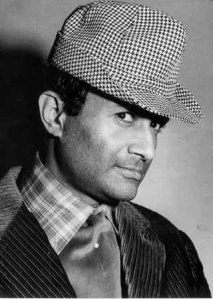
A Tribute to the Ever Green Star…… Romancing Life Forever

“Hai Apna Dil tho Awara” (movie Solva Saal), these words were slightly inquisitive to me as a child, and I vividly remember listening to this on the tape recorder. My maternal aunt, who used to hymn this song repeatedly, played the record many times.

I didn’t know who the actor was and what the song was all about. I was three or even four, and to date, there are glimpses of me holding onto our drawing room sofa and above me was the cassette player. A few years later, I got to know the actor being Dev Anand and my aunt was just one among million fans of his.

Interestingly enough, as an eight-year-old kid, the movie I enjoyed watching was ‘Awwal Number’ not because of the story but because of its cricket. I lived my school years watching his movies sporadically as and when it appeared on television, until one fine day…

That particular moment happened sometime in 2000, as I was looking for some old classics, I found this CD. Mohd Rafi and Dev Anand and thus started a unique journey. ‘Tere Mere Sapne Ab Ek Rang Hai…..’

I had three weeks before my final exam, and I was hooked to this song. The movie was Guide, and it starred Waheeda Rehman alongside Dev Anand. R.K Narayan wrote the novel and Dev Anand had produced this movie directed by his younger brother Vijay.

Looking back, the curiosity of Guide took me deep into my hobby of researching movies. Before this, I knew the facts of some movies but never went a step ahead in knowing its intricacies.

I wanted to know why such a song existed in the movie Guide. Why is the title of the movie ‘Guide’? Why not any other Hindi name?

With such heavy thoughts, I was not entirely focused on the upcoming exams. While I was solving problems in the college library, and while picking up books, I saw the novel ‘Guide’ lying on the table next to a rack. Instead of two books of mathematics, I took one and another being ‘Guide.’

I so wished Guide to be part of my English class; it would have helped me reading and look like a stud in front of my English teachers (mostly they were females). But my thirst for knowing more about Guide overpowered any such thoughts, and seamlessly, I began reading.

The story of Raju, the Guide, his encounter with Rosy, the dancer, and her recluse husband Marcos, and Raju’s friend Gaffur, the driver; I could visualise why such a song would have been written.

At the end of Guide; it wasn’t just about Raju I wanted to know; it was about the man and his movies that brought ‘Raju’ to the screen. Like a good boy, I finished my exams and then started my quest to learn about Dev Anand movies.

My mom was a kid and young when Dev Anand was at his peak, and hence my information was limited. Nevertheless, she provided a lot of facts concerning him. It so happened while spending post-exam holidays with my grandparents I got to know more about my grandpa’s fascination for movies and wanted to learn more about the film he used to watch and, in particular, about Dev Anand.

To give an idea, my maternal grandfather is a great conversationalist and let it be any topic; he would have his opinion and always in a way the other person would want to hear. He made people laugh while conversing, and yet he provided important man details; I like that thing in him.

We started our conversation on movies. By that time, my quotient on Old Hindi movies was getting enriched with many internet researchers and reading backdated Filmfare issues (I used to subscribe to them) and the introduction of the Star Gold channel on television.

I was fifteen and a few months older by this time as I went about watching his movies and collecting all his favourite songs.

His movies echoed something new each time since his debut in 1946. After his debut in ‘Hum Ek Hain,’ he had to wait a good two years before he was toasted as the next big thing. The 1948 movie ‘Ziddi’ made him an instant superstar and raving on the success; Dev Anand got into the movie production business. Not surprisingly, the production name was Navketan International was formed in 1949-50. Navketan means’ newness’.

He was successfully paired with established actress Suraiya and was left heartbroken when Suraiya’s grandmother rejected his proposal because of religious issues. Dev Saab and Suraiya made seven movies together, and all were a success at the box-office. The last of the seven films were released in 1951.

I remember watching the movie ‘Taxi driver’ on a Sunday morning a long time ago. I was fascinated by the movie titles he came up with, especially the English titles. I am not sure if this was due to his heavy Hollywood influence or his English literature background.

Nevertheless, his titles were unique to the movie generation of the 1950s and next. House No. 44, C.I.D, Paying Guest, Love Marriage, Jewel Thief, Gambler, etc.

During ‘Taxi driver,’ he got interested in Mona Singh, aka Kalpana Karthik, and married after the movie got released. The pair went steady to date.

In my short movie research history, I can say no one has been given such admiration despite how movies performed at the box-office.

Since 1971, he has made 33 movies (the latest being ‘Charge sheet’ released in Sep 2011), but none hit the top mark. But yet, he went on….. It reminds me of the line ‘Mein Zindagi ka Saath Nibata Chal Gaya’ from Hum Dono, the very same song I remember my granny hymning while cooking my favourite dishes. She gives a smile and has her memory of Dev Anand.

She recalls ‘Hum Dono’ a lot, which happens to be one of the first double-acting movies in Indian movie history.

Widely termed as the Gregory Peck of Bollywood, he had created his niche in the movie industry. Be it dialogue delivery, the head nods, or the style with which he went about making movies, it was creative in motion.

He introduced the gangster movies to the Indian audience, the first stand out the romantic hero of Bollywood, an experimenter having many pot-boilers to his credit and the songs. Oh yes, the songs that will remain forever with ages to come. No wonder he chose the title ‘Romancing Life’ as the name for his autobiography.

He is no more, and the tremendous towering personality of positivity has left the world. Dev Anand, known as the ‘ever green’ star, was always full of life, a life filled with optimism.

Again my mind goes back to the movie Guide, and I remember the line, ‘Aaj Phir Jeene ki Tamanna Hai’ (I would like to live again today), and it was how he lived his 88 years living each day.

To Catch a Thief (1955)

One of the exciting races in the Formula One calendar is the Monaco Grand Prix. Located in the French Riviera, the race held in Monte-Carlo attracts a crowd worldwide. The famous Casino, the yacht parties that go on till the wee hours of the morning, are just attractions that make this race very exciting and a royal affair.

I had an opportunity to visit this place this summer. One of the first things that hit me as a Formula One buff is the pleasure of visiting one of your favourite circuits, which is built around the existing public roads of Monaco.

Although I missed the race by a good two months, it was a kick to do a lap around the circuit. The drive to Monaco from the Nice-Cannes highway reminded me of yet another favourite of mine, movies. One movie that instantly came to my mind was Alfred Hitchcock’s 1955 thriller ‘To Catch a Thief.’

The story goes this way; John Robie, played by Cary Grant, is a retired jewel thief who was famous for his cat burglary, which earned him the name ‘The Cat.’

After having served as an undercover for the French Government during World War II, John Robie is a happy, relaxed leading a peaceful life in his vineyards along the French Riviera.

This was until one day, he reads about a series of burglaries committed, and police suspects him to be the one, as the jewel thefts were reminiscent of John Robie in his heydays.

High on the list is an American Millionaire, Jessie Stevens (Jessie Royce Landis), who, along with her beautiful daughter Frances Stevens (Grace Kelly), is on a tour of Europe to search for a suitable husband for Frances.

To prove his innocence, John must become a jewel thief, and he takes the help of Frances and the insurance agent of Lloyds, Mr. H.H. Hughson, to catch the thief, the real thief who had committed a series of thefts in a typical John Robie manner.

A car chase is an integral part of all the four collaborations of Hitchcock and Cary Grant) where Grace Kelly (incidentally, on the very same road that, years later, would lead to her death) drives Grant down the famous and winding Three Corniches along the Cote d’Azur.

An example of Grant’s charisma is in the picnic scene- Grace Kelly offers him a choice of breast or thigh from her basket of goodies, and he, in his charismatic style, responds, “The choice is yours.”

In the end, John Robie manages to catch the copy cat who turns out to be a young girl (Danielle) played by Brigitte Auber, daughter of one of his former colleagues. The movie opened with mixed reviews due to delays in releasing and became one of the biggest hits of the 1950s.

Keeping the box-office standards of Cary Grant of the 1940s, many of his movies in the 1950s didn’t meet expectations. Therefore Cary Grant had decided to retire himself from the film.

With his age being 50, he felt the movie industry had moved on with the emergence of youth like Marlon Brando and Montgomery Clift. He spent some good time with his wife Betsy Drake, who was half his age before making a comeback when he heard the script of ‘To Catch a Thief.’

Much to Betsy Drake’s displeasure, he went ahead and started shooting this movie at the French Riviera. Betsy Drake accompanied him to the shoot, as she was less than thrilled of him doing love scenes with Grace Kelly.

This movie mirrors Cary Grant’s real-life in many aspects. In the film, the so-called cat burglar insists he is retired, moved on something which the police authorities have trouble believing in, and took the thief’s role to catch the real thief.

Cary Grant had previously announced his retirement from films twice in real life, yet he was out there shooting for this movie.

In the movie, Robie is attracted to a beautiful blonde who is half his age; in real life, he was married to a beautiful blonde, Betsy Drake, half his age.

Another mirroring point, Robie proves his innocence in one last robbery to prove his innocence, and in real life, he came out of retirement to make one last movie to prove he was still the star of the highest order.

In his usual style of making cameos, Alfred Hitchcock, about 10 minutes into the movie, is seen sitting next to John Robie on a bus. The film was nominated for four Oscars (Best Cinematography Colour, Best Art Direction, Best Set Decoration Colour, and Best Costume Design Colour) and won a single Oscar for Best Cinematography Colour (Robert Burks).

Produced by Paramount Pictures, the movie’s story was inspired by David Dodge’s novel of the same name. Set in the picturesque French Riviera, this was the last Grace Kelly movie for Alfred Hitchcock (previous being, Dial M for Murder and Rear Window). She later married Prince Rainier of Monaco and became Princess of Monaco till her death in 1982 due to a car accident.

Released in 1955, To Catch a Thief was a sort of ‘comeback’ movie for Cary Grant, who went on to act for few more years till he finally retired in 1966 at the age of sixty-two.

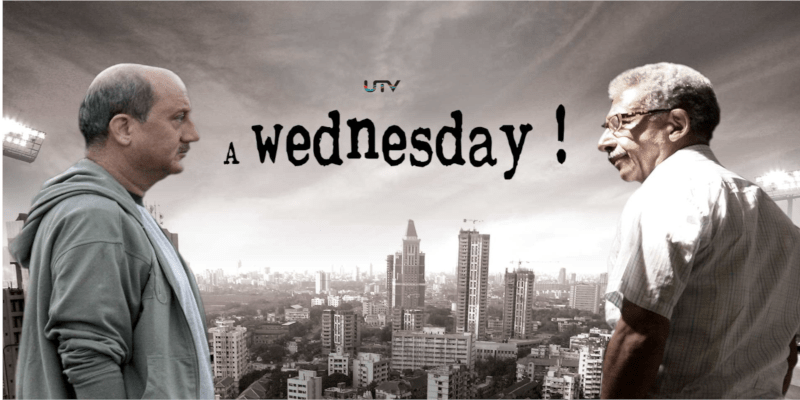
My Thoughts on Freedom on ‘A Wednesday’

At first go, it seemed like – Man, I should have watched it when Saagar’s (a good friend of mine from college) mom recommended this movie to me way back in 2008. Since that day, I never really bothered to watch or overthink the film.

I was on my way to higher studies, and this movie never crossed my mind until a few days ago when I saw a status on my wife’s Facebook wall. The status read this way – “I was watching A Wednesday some days back and loved it for the sheer cheek of Naseeruddin Shah as a common stupid man! I think now we need more and more of them!!”

I didn’t look at the reviews, and neither I knew what the plot was.  All I knew; it had Nassiruddin Shah, and his role was really good, as told by Saagar’s mom. After reading the status last week, I got interested, and I decided to watch this movie. A sheer coincidence, I chose a Wednesday to watch this movie.

The screenplay was quite impressive, and I liked the flow with which the movie moves ahead and concludes. There were no songs, a plus in such a film, and there wasn’t any violence in the story. It was artistic, and movies are all about communicating one’s stories, and this did.

To add my personal view, somehow I always feel while watching the movie, the stupid common man played by Mr. Shah isn’t a terrorist, nor does he have grand plans to upset the everyday public life. It was his way of dealing with justice. “We are resilient by force and not by choice,” and frankly, this line quite sums up the voice of a common man.

We live in a country where a common man is suppressed to make his choice, by and large, forced to make a living. Our patriotism isn’t just talking about injustice; it is about making a difference and showing the way.

I read a quote yesterday – “An activist is not a person who complains about the surroundings being dirty; an activist goes about cleaning them.” This very act of his seems foolish to most of us when he could have led a less stressful life by not getting into it at all. This quote summed up why the protagonist, the unknown caller, calls himself a ‘stupid common man.’

Since my college days, I have been asking myself this question– “What it takes to lead a better life?”  Over a while, I have come to understand that the answer lies within us. Only I can define the better life I want to have, and for that, I need to get to know my inner self and where it wants to be. This, I believe, is an on-going process and will only get better with time.

If I am not happy with my surroundings, all I can do is, change myself and hope for a better tomorrow.

We fought for our freedom, and finally, a date was chosen, 15th August, to celebrate our freedom. But deep down, we all agree with ourselves we are far away from freedom. And what is the meaning of having freedom? It is to live by choice and not by force.

To be free isn’t just having a corrupt-free government; it goes beyond it. Although it isn’t easy for me to accept this wholeheartedly at times, the truth is, each individual gives his/her best action based on his/her set of beliefs at any instant of time.

In an ideal world, everyone can do anything, and yet no single individual will suffer. This is the definition of freedom according to the perfect life. In practical terms, what (privilege) seems like a panacea maybe a potion that would stop our evolution as a human.

I am attached to many people, things, etc., unless I get rid of each one, I may never be able to attain freedom. Or is it a restriction I am putting on myself?

Well, it is all about my choice. I have to accept that I have a place in this world, and I have a role to play.

And at the same time, acknowledge the fact there will be others with their own set of ideologies living around me. There will be a clash in some way or the other from time to time.

That’s the very essence of work in progress.  On the other hand, there will be some beautiful moments. It is essential to strike a balance according to one’s idiosyncrasies. Understanding oneself seems the most effective solution, in my view. It is by far the best homework to understand others.

For freedom, all I can say from my experience is that; there will be brief moments in life where our mind will think, our heart will feel things without any notion of fear. Such a condition to me is freedom, especially in the world we live in. How long it lasts? I do not know, but I can safely accept that I look forward to such moments more and more.

‘A Wednesday’ is a 2008 thriller movie made in Hindi. Directed by Neeraj Pandey, this movie was well received by the audience due to its brilliant story and a well-twisted ending. Apart from Nassiruddin Shah, the cast includes Anupam Kher, Jimmy Shergill, Deepal Shaw, and Aamir Bashir.

My short Independence Day Speech

You know, whenever I read about our Constitution, it makes me wonder, as to what is independence? Was it just a day? Or was it a starting point of something significant?

What is happening to India isn’t just India’s result but also a combination of the inconsistencies across the globe and co-incidences?

Irrespective of how we have come along these 64 years, I still can say, India is its competitor, and one needs to look in before looking out. I never realized much about being an Indian when I was in India because I didn’t understand its feelings.

Over the last few years, whenever I am outside of the country, my passport (which is the defining factor mostly) speaks a lot and then meets people. Many are informed about India through different opinions, and all I add is another opinion from an Indian perspective. There are several perspectives on a particular thing, just like we have several Gods and Goddesses in our mythology. We fight to prove our views are right, but I guess I realized that’s the beauty of the country I was born.

“All differences in this world are of degree, and not of a kind because oneness is the secret of everything.” – Swami Vivekananda

Over the years, India has made people give their opinions and that I feel is a freedom of speech. So in that sense, I am independent to give out my thoughts. That’s fine until now. I sense we need to move ahead and take a step forward with the conviction that action speaks louder than opinions.

I believe we seek to be independent more than ever before, at least in my generation of living. We, the people, haven’t realized the government’s power that is made by people alone. We need to understand the importance of being a drop and its contribution to the ocean. I seek our country to be more self-aware and for that each individual to be self-aware before going out and condemning things.

As Swami Vivekananda said – “The goal of mankind is knowledge… now this knowledge is inherent in man. No knowledge comes from outside: it is all inside. What we say a man ‘knows’ should, in strict psychological language, be what he ‘discovers’ or ‘unveils’; what man ‘learns’ is really what he discovers by taking the cover off his own soul, which is a mine of infinite knowledge.”

India is merely a geographical land if we remove the masses from it. So in that sense, I have to think of the power we people hold. We can accept, we can change, and at times we can hope for the better.

“Hope is a good thing, maybe the best of things and no good thing ever dies” – Shawshank Redemption

Connecting Dots of One’s Life

Life is a series of dots that we hop or connect during our stay in this world. Each dot represents a momentary feeling that makes us go to the extremes in the emotional quotient. At the same time, some are a balanced emotional diet to live with.

It’s been a series of dot trips I have had over the past few years, and each represented a significant milestone of some sort.

Not sure how, but somehow I have left a particular dot with some confidence that this dot helped me complete the picture one day. I am no harbinger to pinpoint exactly how or what significance each drop holds at the moment; bluntly confident enough to say it will work for sure.

I quote this line and sometimes did use previously – “The world we live in is cynical” if not, at least the events that occur make us believe it to be cynical.”

Some part of it is from the movie ‘Jerry Maguire’, and the rest is based on my experience. Our confidence, beliefs, choices, and opportunities we make out of things that life dishes out each day determine the level of cynicism we end up living with.

I ask myself why I chose this particular field. And to be honest, I am not confident in saying this is where I will be in ‘X’ number of years. But the inner fire ignites and gives me a feeling; I will reach that point in life, however unclear it seems at the moment.

How do I identify that particular dot in my life, if I ever reach it in the future? Guess it is all related to my present and, to an extent, my past life. I cannot change my past but can always look at my presence differently and move on with it.

It isn’t a crime to get stuck with a particular dot, but failing to attempt to move to get to the next dot is a crime. Well, that’s how I choose to look at it.

Learning from my past, all I can say – There will be the feeling of being on top of the world associated with when I reach that dot. That particular day, I can visualize and even say eloquently about the different dots of my life and how relevant it has been to get to that feeling. Till then, I say to myself – “Keep on hopping from one dot to another; you never know when you hit that feel-good factor button inside us.” Ultimately it’s all about hitting the feel-good factors on more occasions at our dot stops.

P.S – I do not know to define the ‘feel-good factor.’ So it is better left to one’s interpretation.

My Favourite Wife (1940)

Marilyn Monroe took the role in ‘Something’s Gotta Give’ to extreme heights before bidding a farewell to everyone from this world. Doris Day, similarly in ‘Move over Darling’ was charming and did justice to her role.

While one movie had to be abandoned, the other was seen as a good remake of this 1940 movie.

My Favourite Wife is the one in the discussion that gave the source to the movies mentioned above while being inspired by Alfred Lord Tennyson’s poem “Enoch Arden.”

This movie had a pre-cursor, plot-wise in the silent era, most notably D W Griffith’s epic ‘Enoch Arden’ in two parts made in 1911. Ellen Arden (Irene Dunne) is supposedly killed in a shipwreck seven years ago. Her husband, Nick Arden (Cary Grant), after having hoped all these years to see his wife come back, decides to have her issued dead in the court. This would ensure he could move on and marry Bianca (Gail Patrick) legally. Nick has two kids from Ellen.

Nick and Bianca get married and are on their way to their honeymoon.

Twist in the tale as Ellen appears after having been rescued by a ship from a distant island. She comes home and gets to know about Nick’s wedding and feels sad about him moving on with life. She decides to surprise him and goes to the hotel where the newlywed couples have booked their honeymoon suite.

The expression on the face of Nick upon seeing Ellen is a treat for audiences. He feels guilty about the fact that he cannot embrace his long-lost wife with the same compassion. At the same time, he cannot think about his newlywed status with Bianca.

Hesitation to come out with Bianca’s truth, he escapes from confrontation, and the scenes have been shot well, portraying Nick’s denial to face the truth. Nick is jealous that Ellen had spent the last seven years with a guy on that island. He was curious to know who that guy was. Ellen tries to camouflage this fact by introducing a dumb guy so that Nick doesn’t have an issue to get back at her. Incidentally, Nick, driven by jealousy, decides to find who that guy was. It turns out to be quite a handsome guy.

Unable to bear this, he expresses his irritation to Ellen. In the meantime, Bianca is confused as to why she isn’t able to live with Nick and keeps wondering what’s going on in Nick’s mind. He tends to avoid her whenever she tries to get close to him or when she is in a mood to make love.

Out of two wives, Nick has to make a choice. He chooses his favourite wife, and that being Ellen. One can sympathise with Bianca as I feel she has been wronged here. But, since this being a movie on the lines of screwball comedy, one can imagine having characters like Bianca.

Irene Dunne and Cary Grant match their previous success on a husband-wife theme, The Awful Truth. In particular, Irene Dunne looks fresh, and one cannot believe she was older than Cary Grant in real life. The scenes involving the hotel manager and the judge are mind blowing-ly funny. Randolph Scott plays the role of Steve Burkett, who accompanied Ellen on the deserted island.

Directed by Garson Kanin, this movie was initially slated to be directed by Leo McCarey. A freak accident prevented him from executing and hired Garson Kanin to do the honours.

The movie was a success and managed to receive three Oscar nominations for Best Art Direction, Best Music – Original Score, and Best Writing – Original Story (looks like by altering story and some of its elements from another play are considered original).

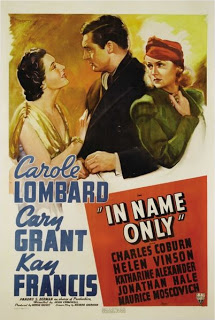
In Name Only (1939)

Fishing on a sunny afternoon can be quite a pleasant thing. It is quite relaxing. The fishing rod’s string gets stuck to one of the tree branches, and it isn’t enjoyable anymore. A good-looking stranger comes to the rescue, and there it began the story of ‘In Name Only.’

Julia Eden (Carole Lombard) is fishing with her daughter Ellen (Peggy Ann Garner) when the string gets stuck. Outcomes Alec Walker (Cary Grant) to offer his help. He is the son of the fishing estate owner. He strikes a conversation with Julia, and they both seem to have an excellent time chatting up.

It isn’t surprising that they fall in love with each other. Relatively easy to fall in love. Alec Walker is the son of a wealthy man who has an excellent reputation in social circles. Alec is unhappily married to Maida Walker (Kay Francis), which is one reason to fall in love with Julia. Julia and Alec keep meeting often, and it is clear the liking they have for each other.

Julia is unaware of Alec’s marital status. It takes a car accident and Julia’s sketchbook in the car for Maida to know about the other lady’s presence in Alec’s life. Who is Maida? She is a good-looking lady, a very calm, gentle, loving wife, and a daughter-in-law. That was the impression she had on Alec’s parents while having no such affection towards Alec.

Marrying a wealthy man’s son and being among the top in social circles can be quite an incentive, and she wasn’t the one to let go of this at any cost. She wasn’t in love to be married to Alec and wasn’t prepared to give up even when Alec wasn’t interested in her.

She makes quite a scene of Alec’s attraction for Julia and refuses to give divorce when Alec asks for one. Instead, she decides to be with Alec’s parents to have their support against her husband, their son. Julia is in love with Alec and is looking forward to being with Alec.

Once she gets the message from Maida and, coupled with Alec’s hesitance to break the social norm and accept her in total, she decides to give up on the relationship, thinking it has no future. Alec is in the middle of a deep emotional crisis, and he decides to become a recluse and stays in a hotel.

He gets drunk on a winter night and manages to get ill (pneumonia) as he doesn’t pay any attention to the cold winters of Christmas. He is admitted to the hospital. To restore Alec’s zeal, Julia decides to comfort him, falsely assuring him about them getting together.

Maida steps into the room, and Julia, while trying to block her, gets into a confrontation with her. Maida confesses openly about her intentions and states the reason for getting married. She even claims to have sacrificed her love to marry Alec and for the social status attached to it. This was overheard by Alec’s parents and recognises what kind of illusion they have been all this long.

One of the fascinating aspects of this movie is the intense portrayal of all the main three characters. Kay Francis impresses with her impish tricks, while Carole Lombard exhibits the other extreme of a lady pristinely in love. Cary Grant plays the lovable, irritated guy who manages to pull off Alec Walker’s role with subtle sophistication.

Directed by John Cromwell, the story of this 1939 RKO release is inspired by Bessie Breuer, an American writer’s debut novel ‘In Memory on Love’ (1935)